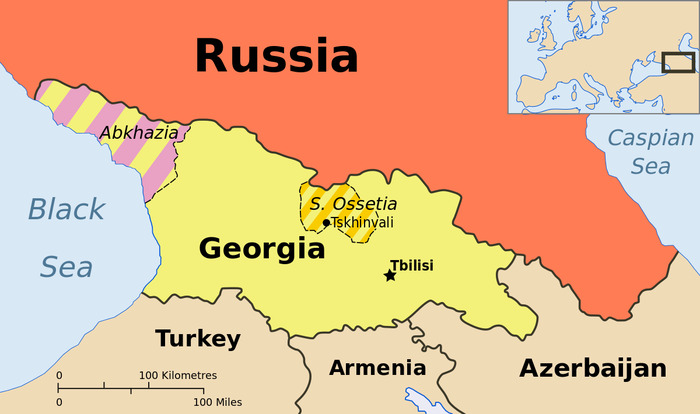
Separatist Abkhazia is preparing to change its constitution. De-facto President Aslan Bzhania has already received the proposal from the special panel. The prime ministership might be eliminated, according to one of the suggestions.
The commission, which was established more than a year ago, concluded that the post of prime minister is unnecessary in the Abkhaz executive power system, because the president of the country is not only the head of state but also the head of the executive power, according to the current constitution.
“This is one of the key changes in the proposed model which will serve the following purposes: elimination of dualism (duplication of powers between the Presidential Administration and the Government Office); institutionalisation of the centre for making administrative management decisions; reducing the time of passage and approval of documents; strengthening the responsibility of members of the Government; optimisation of the state apparatus; reduction of budget expenses,” the commission’s conclusions read.
According to the commission’s proposals, when the post of prime minister is liquidated, the decision-making centre in the executive branch remains in the hands of the president only, free from any collegial decision-making body.
According to this formula, the executive branch consists of the president and the government, whose ministers are appointed by the president in agreement with parliament.
Together with the position of the president, the positions of deputy prime ministers will also be abolished, and members of the government will report directly to the president.
It is recommended that the president designate a minister in consultation with the People's Assembly, which is now under his sole jurisdiction. After a candidate for the office of minister addresses the deputy corps with a report on his ideas and a program within a certain domain or industry, the parliament votes on whether to approve or reject him.
In the event of the People's Assembly voting twice against the president's nominee, the president has the authority to select a minister on his own. However, when six months have passed since a minister's appointment and he has not received parliament's approval, the deputies have the power to raise the matter of confidence in him.
If the National Assembly passes a vote of no confidence in the minister, the president is required to relieve him of his duties and propose a new candidate to the People's Assembly.
Similarly, the People's Assembly has the power to vote no confidence in any minister who has been nominated with the approval of parliament. The president is required to fire a minister if the People's Assembly registers a vote of no confidence in them again within six months.
According to the members of the Constitutional Commission, such a redistribution of powers between the executive and legislative branches gives parliament “real instruments of influence on the political process, and the reverse side of this mechanism is People’s Assembly also taking responsibility for the decisions made.”