About Macron's Recent Statements
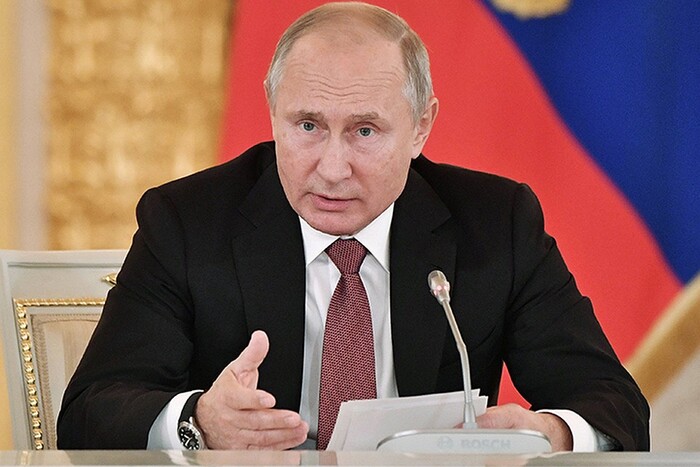
On October 14, at an enlarged meeting of the CIS Council of Heads of State in Astana, Russian President Vladimir Putin called President of France Emmanuel Macron's statements about Russia's role in resolving the Nagorno-Karabakh conflict and Armenian-Azerbaijani relations incorrect and unacceptable.
The head of the Russian state admitted that he was surprised to read some of the statements of the President of France, voiced at the quadripartite meetings in Prague. The President of Russia believes that in these words there is no understanding of the very course of the conflict and that there is no information about the position of the parties. The Russian leader suggested that the owner of the Élysée Palace is simply not informed about the position of the parties in the Nagorno-Karabakh conflict. "Therefore, they sounded incorrect or perverted and unacceptable," Putin said. He suggested that there would be an opportunity for him further to discuss this issue with the French leader himself.
Putin stressed that Russia has always sincerely sought to resolve any conflicts, including those related to Nagorno-Karabakh and the areas around it. "Of course, we welcome the mediation efforts of anyone. The main thing is that they contribute to calming the situation and benefit all participants in unresolved contradictions and conflicts," he summed up.
Earlier, Emmanuel Macron touched on the role of Russia in settlement of the Armenian-Azerbaijani conflict. The French leader argued that Russia took advantage of this conflict, intervened, and clearly played the game of Azerbaijan with the complicity of Turkey, and then returned there to weaken Armenia.
About Armenia's Concerns Regarding CSTO
Vladimir Putin supported granting the Commonwealth of Independent States (CIS) observer status in the Collective Security Treaty Organization (CSTO), as this step would create additional mechanisms for resolving security problems in the CIS space.
The document on obtaining the status was submitted for signature during the meeting. At previous meetings of the CIS leaders, the importance of stepping up joint work to strengthen security in the region and develop interaction between the CIS and the CSTO was discussed.
"We support the decision proposed for our approval to obtain the CIS observer status at the CSTO. If some colleagues, in particular, the Prime Minister [of Armenia], have some concerns about this, then this issue needs to be further worked out, paid attention to, and worked on," the President of Russia noted. At the same time, Putin expressed the opinion that the status of a CIS observer in the CSTO does not interfere with anyone but, on the contrary, creates additional opportunities to use all these platforms for consultations and finding solutions.
Read also: