Pipeline politics continues to grab headlines in Kazakhstan. When a Russian court ordered the Caspian Pipeline Consortium (CPC) to halt operations, citing administrative violations, on July 6, Kazakhstani exporters wondered how they would send oil to their foreign customers, as 80 percent of the country’s exports travel through the pipeline.
According to three unnamed sources, as the country looks for alternatives to a conduit Russia threatened to close, Kazakhstan is anticipated to start selling part of its crude oil through Azerbaijan's largest oil pipeline starting in September.
According to a source, Kazmunaigaz (KMG), the State Oil Company of Kazakhstan, was in advanced talks with SOCAR, the State Oil Company of Azerbaijan, about selling 1.5 million tonnes of its crude through the Azerbaijani pipeline that transports oil to Ceyhan on the Mediterranean coast of Turkey. The amount is a trickle at slightly over 30,000 barrels per day compared to the typical 1.3-1.4 million barrels per day that passes through the Caspian Pipeline Consortium (CPC) pipeline. According to the source, the Baku-Tbilisi-Ceyhan (BTC) pipeline will begin to flow when the final contract is signed at the end of August. According to two sources, a further 3.5 million tonnes of Kazakh oil might begin flowing through a different Azerbaijani pipeline to the Georgian Black Sea port of Supsa in 2023.
Importantly, on July 11, the Russian court's verdict stopping oil flow via CPC was overturned due to political and commercial pressure. The 30-day ban was instead converted into a fine of only $3,250. One of the most popular ways to put political pressure on hydrocarbon businesses and projects is through environmental damage allegations. The governments of both Russia and Kazakhstan have utilized environmental penalties to increase their payments to oil and gas consortiums or to buy shares in the projects. In the early 2000s, this was true for the offshore Kashagan oilfield in Kazakhstan's portion of the Caspian Sea. A similar thing happened in 2012 when a penalty for environmental violations led to the sale of a share in the northern Kazakhstani gas and condensate field Karachaganak. The old Russian route from Atyrau to Samara could only pump a maximum of 15 million tons per year, which pales in comparison to the 65 million tons that CPC can pump.
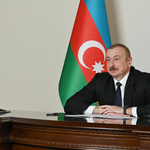
In July, Caucasus Watch reported that the Kazakh government opted to expand supply via alternate channels, through Azerbaijan, and to China, in response to the constant suspension of oil exports through Novorossiysk. On July 7, the President of Kazakhstan, Kassym-Jomart Tokayev, held a meeting on the development of transport and transit potential and declared the need for diversification of oil supplies. "The priority direction is the Transcaspian route. I instruct KazMunayGas to work out the optimal option for its implementation, including the possibility of attracting investors to the Tengiz project. The government, together with Samruk-Kazynaya, should take measures to increase the capacity of oil pipelines Atyrau-Kenkiyak and Kenkiyak-Kumkol," said Kassym-Jomart Tokayev. Judging by the statement of the President of Kazakhstan, the authorities want to supply more oil to China and actively use transit through Azerbaijan to deliver oil to the Turkish port of Ceyhan.
Read also:
Garibashvili Visits Kazakhstan and Meets with the High Officials
Constructing the Middle Corridor: the Case of Georgia and Kazakhstan