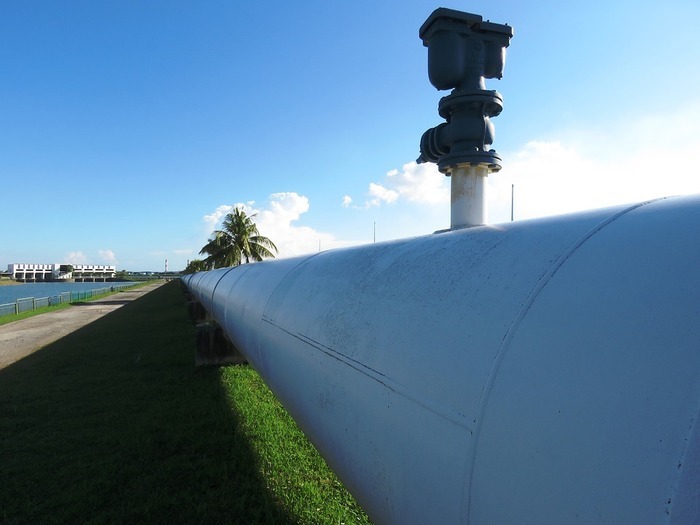
The Trans-Adriatic gas pipeline, which is the European section of the "Southern Gas Corridor" from Azerbaijan to Europe, has reached its excess capacity. Earlier, Brussels was negotiating with Baku to increase supplies in order to reduce imports from Russia. The additional deliveries could amount to about 1.5 billion cubic meters, or 1% of Russian gas exports to EU countries in 2021.
In early February, the European Union called on Azerbaijan to increase gas supplies to the EU countries, and from the middle of the month, supplies of Caspian fuel through the Trans-Adriatic Gas Pipeline (TAP) increased by 15% - up to 31.7 million cubic meters per day. Judging by the data from the platform of operators of the EU countries ENTSOG, the project is operating at super-capacity - 11.6 billion cubic meters instead of 10 billion cubic meters.
Compared to last year, the increase in Azerbaijani gas supplies may reach 3 billion cubic meters, but only 1.6 billion cubic meters can be considered additional volumes, since this year TAP was supposed to reach the designed 10 billion cubic meters.
Most of the supply, about 28 million cubic meters per day, falls on Italy. The rest goes to Greece. Bulgaria has a contract for 1 billion cubic meters of Azerbaijani gas per year. However, direct deliveries since the launch of the Trans-Adriatic Gas Pipeline at the end of 2020 through Greece have so far amounted to only about 20 million cubic meters. As before, an interconnector to Bulgaria has not been built, and the country can receive part of the declared volumes only in the form of a virtual reverse of Russian gas from Greece.
Earlier, the State Oil Fund of Azerbaijan (SOFAZ) reported that revenues from the country's major oil and gas fields totalled $1.5 billion in January-February 2022.
$1.3 billion came from the Azeri-Chirag-Guneshli block of fields, which is the largest oil field in the Azerbaijani sector of the Caspian Sea.
The fund received $227.5 million in earnings from the Shah Deniz field, which is one of the world's largest gas-condensate fields, including $22.1 million in condensate.
Furthermore, since 2001, revenues from the ACG group of fields have totalled $156.6 billion, while revenues from the Shah Deniz field have totalled $4.7 billion.
Moreover, according to the Azerbaijani Energy Ministry, Azerbaijan boosted gas transportation by 12.9% in January 2022.
Around 2 billion cubic metres of gas were sold abroad. Turkey received 0.8 billion cubic metres, Europe received 0.8 billion cubic metres, and Georgia received 0.4 billion cubic metres. In addition, TANAP was used to export more than 0.5 billion cubic metres to Turkey.
Gas output was 4.1 billion cubic metres in January 2022. The Azeri-Chirag-Guneshli set of fields yielded 1.2 billion cubic metres, whereas Shah Deniz yielded 2.2 billion cubic metres. During this time, SOCAR produced 0.7 billion cubic metres of gas.
Also, the European Union and the Azerbaijani government agreed to expand the Southern Gas Corridor. At a joint press conference, the European Union expressed its desire to receive more gas from Azerbaijan, and Azerbaijan said it would provide these volumes.
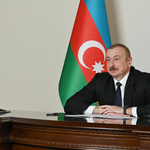
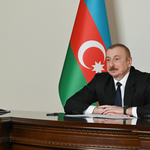
Following the eighth ministerial meeting of the Southern Gas Corridor Consultative Council in Baku on February 4, Azerbaijani Energy Minister Parviz Shahbazov and EU Commissioner for Energy Kadri Simson said in a joint press release that Azerbaijan and the European Union are strategic energy partners.