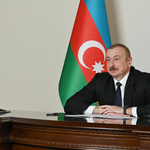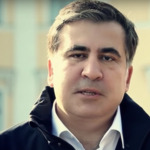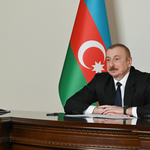
“I'd want to express my gratitude to President Ilham Aliyev of Azerbaijan, the Government of the Republic of Azerbaijan, and all Azerbaijanis for providing us with humanitarian assistance at such a vital and trying moment for Ukraine,” Vladislav Kanevsky, Ukraine's Extraordinary and Plenipotentiary Ambassador to Azerbaijan, told reporters.
The envoy highlighted that the delivered cargo protects hundreds of civilian lives who are now under fire, noting that this is not Azerbaijan's first humanitarian help to Ukraine.
"Medicines, medical equipment, and food are all provided by Azerbaijan. For many years, Azerbaijan and Ukraine have shown this. We are friends as well as strategic partners," according to Kanevsky.
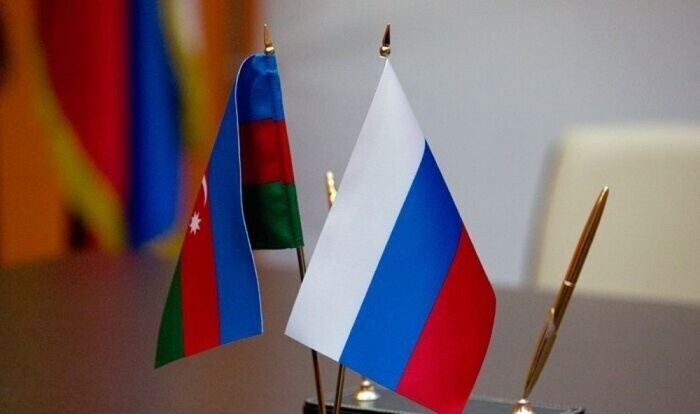
Azerbaijan’s support for Ukraine sparked dissatisfaction in Russia. After Baku’s pro-Ukraine remarks Russian Embassy twitter account in Baku shared a controversy post possibly provoking separatism by stating “a group of Azerbaijani citizens from Lankaran honoured the memory of the Russian military who died during a special operation in Ukraine and handed over to the Russian Embassy in Azerbaijan a commemorative plaque with their portraits and a wreath. Thank you, Lankeran people.” A large percentage of Lankera’s population are Talysh, one of the ethnic minorities within Azerbaijan.
The Talysh people are an Iranian ethnic group indigenous to a region shared between Azerbaijan and Iran which spans the South Caucasus and the southwestern shore of the Caspian Sea.
There are no statistical data on the numbers of Talysh-speakers in Iran, but estimates show their number to be around 1 million. According to unofficial statistics, between 200,000 and 300,000 Talysh citizens live in Azerbaijan. The number of Talysh speakers in 2003 was estimated to be at least 400,000 in the Republic of Azerbaijan. According to the official 1999 census of the Republic of Azerbaijan, whose figures are in dispute by Talysh nationalists, the number of Talysh people in the Republic of Azerbaijan was 76,000.
Historical repression of identity and the inability to practice their culture and language has led the Talysh to an internalised self-repression. This makes it difficult to gauge support for any type of Talysh movement. According to Hema Kotecha, many Talysh fear being associated with the separatist Talysh-Mughan Autonomous Republic, with Russia, or with Armenia if they acknowledge or attempt to talk about their beliefs in the public sphere. The fear of the police is another factor to this silence, although support for secular democracy and shared Azerbaijani-Talysh feelings towards Nagorno-Karabakh contribute as well. The Talysh population is declining; the language is on its way to extinction within 25–35 years, as it is very often not passed on to children. Young Talesh people more frequently speak Persian or Azerbaijani in their communities.
Moreover, the National Talysh Movement (NTM) was formally created in 2007 by Talysh leaders exiled in the Netherlands. The members of the organisation include those who were in support of the Talysh-Mughan Autonomous Republic such as Alikram Hummatov, the self-proclaimed president of Talysh-Mughan. The movement favours an autonomous region within Azerbaijan. It also demands the promotion of the democratic, cultural, and linguistic rights of all minorities within Azerbaijan.