Money transfers and non-oil exports
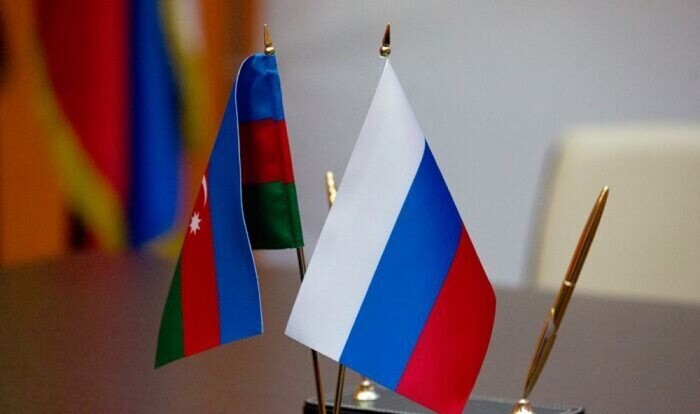
It is believed that the Western sanctions against Russia will greatly impact Azerbaijani immigrants working in Russia. According to different estimates, up to 4 million Azeris send over $1bn from Russia every year, and they will now be sending far less money home.
Economic expert Natig Jafarli of the opposition REAL party has said that small and medium-sized businesses owned by Azerbaijanis in Russia could go bankrupt soon and the businessmen would return home.
"Dozens of thousands of people may return home, and Azerbaijan is not ready for that. This will inevitably lead to the worsening of the social situation in the country. We have high unemployment rates, there is no favourable atmosphere for doing business, and their return may cause additional problems," Jafarli added.
Jafarli also said that the falling ruble would not have a direct impact on the manat (Azerbaijan's national currency) rates since the latter was tied to oil prices. The main impact will be on financial transactions between the two countries whose annual trade turnover amounts to 3.3bn dollars, he said.
Economic expert and MP Vugar Bayramov said that the anti-Russian sanctions will have an impact on Azerbaijan's non-oil exports of which 32.3% go to Russia. Also, the sanctions will affect the Russians' purchasing power, which will mean that the country will import less goods, he said. Bayramov said in view of the possible consequences, Azerbaijani agricultural producers should be looking for new markets in the Persian Gulf and the EU.
On 1 March, most banks in Azerbaijan had stopped transactions in rubles. In addition, money transfers via Russian Contact and Zolotaya Korona payment systems have also been halted, it said.
Transport routes
Economic expert Elshan Bagirzada said that while China will not join the sanctions against Russia, many Chinese companies will have to abide by them due to China's dependence on the Western economy. In view of that, alternative routes will be used for the fright transport between China and Europe, including the transit corridor through Azerbaijan, he said.
Natig Jafarli also said that Azerbaijan could earn additional profit from transit, "but only if the sanctions are not applied to third countries cooperating with Russia.”
Financial expert and former Finance Minister Saleh Mammadov said that Azerbaijan and Turkey would remain Russia's reliable partners in transport and trade. He recalled that neighbouring Iran was also under economic sanctions. Mammadov said that Azerbaijan should assess the situation correctly and build the necessary infrastructure, create a free economic zone, and set up offshore banks and businesses.
Energy sector
Political expert Eldar Namazov said that in case of a Western embargo on Russian energy exports, Moscow could sell its oil and gas to Azerbaijan. He said in this case, Azerbaijan would supply the Russian gas to the domestic consumers and export its own gas to Europe.
However, energy expert Ilham Shaban said that the export of Russian hydrocarbons to Azerbaijan in large volumes would not be possible in practical nor legal terms. He said that there was one gas and one oil pipeline operating between Russia and Azerbaijan. The maximum capacity of the Mozdok-Hajigabul gas pipeline is 4bn cubic metres a year, and Baku-Novorossiysk pipeline max capacity is 5 million tons of crude annually, Shaban said. He also said that Azerbaijan would not be able to ignore the possible Western sanctions.
Elshan Bagirzada believes that Western countries will now be more eager to invest in Transcaspian pipeline projects to decrease their energy dependence on Russia. At the same time, they might also step-up efforts to return Iran to the global energy market, he said.
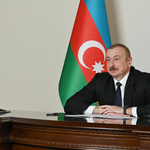
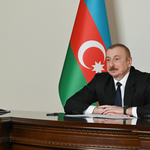
On 2 March, Azerbaijani President Ilham Aliyev held a meeting via videoconferencing with visiting Romanian Energy Minister Virgil Popescu and discussed expansion of bilateral energy cooperation.
On the same day, French President Emmanuel Macron called President Aliyev, and they discussed humanitarian support for Ukraine, as well as energy issues, the official President.az website said, without giving any further details.
Earlier this year, Azerbaijan said it was ready to increase gas supply to Europe if the latter ensured investment in production and delivery.