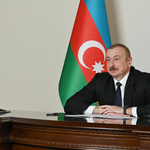
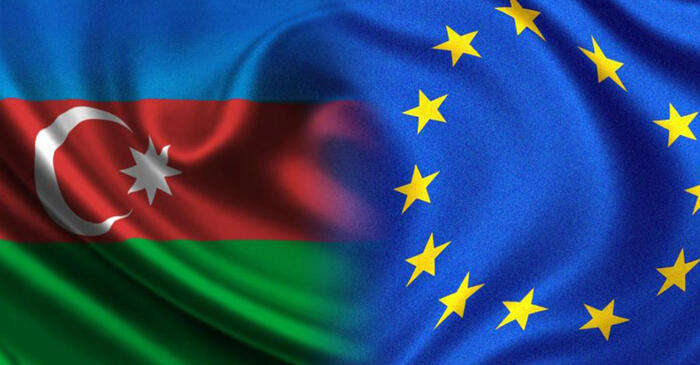
"In 2022, it will be possible to sign a comprehensive, new agreement between the European Union and Azerbaijan." The statement came from Azerbaijani Foreign Minister Jeyhun Bayramov at a joint press conference with EU Neighbourhood and Enlargement Commissioner Olivér Várhelyi.
Bayramov said that in the summer of 2021, the Azerbaijani side conveyed its position to the European Union on several outstanding issues, in accordance with the chapter on the trade part of the agreement.
"A few days ago, the European Union submitted its proposal to Azerbaijan's position. The document is currently being studied by specialists in Azerbaijan. We believe that by 2022, an agreement has been reached on all outstanding issues, and in 2022 it is possible to reach a comprehensive agreement between the European Union and the Republic of Azerbaijan,” he said.
Bayramov also said that the development of existing dialogues in several areas will allow for further expansion of economic ties.
"The European Union is our largest economic partner. Our relations are developing, regular discussions are held," the minister said.
Commissioner Olivér Várhelyi stressed the importance of partnership with Azerbaijan for the European Union and the need to further strengthen these relations.
He said Azerbaijan is a reliable partner of the European Union. The commissioner said that a 2 billion euro financial package had been allocated to Azerbaijan within the economic investment plan, and that the implementation of specific projects was being considered.
The sides exchanged views on regional security, energy partnership, economic relations, as well as transport and communications, sectoral cooperation, as well as cooperation in other areas of mutual interest.
Economic expert Natig Jafarli said that one of the key elements of the agreement with the European Union is Azerbaijan's membership in the World Trade Organization. In addition, when concluding trade agreements, mutual recognition of standards, packaging of Azerbaijani products in accordance with European standards, labelling and all these procedural issues had to be addressed as an obligation to Azerbaijan,” Jafarli said.
Jafarli added that the main areas of disagreement were issues related to membership in the World Trade Organization, standards, and airspace, i.e., Azerbaijan's opening of its airspace to foreign companies.
“Azerbaijan wanted a concession on membership in the World Trade Organization, i.e., to become a member of this organisation in 3 or 5 years. It is possible that general agreements have been reached on these issues.”
According to the expert, the part of the agreement on human rights and democratic elections was agreed in 2018.
"Azerbaijan made these commitments during its accession to the Council of Europe but remained on paper. The country can never say that it will not hold democratic elections and does not respect human freedoms," Jafarli said.
At its meeting on November 14, 2016, the EU Council of Foreign Ministers gave a mandate to the European Commission and the EU High Representative for Foreign Affairs and Security Policy to negotiate a comprehensive agreement with Azerbaijan on behalf of the EU and its member states.
The agreement mainly consists of political, security, trade, and economic topics.
The Eastern Partnership covers six neighbouring countries of the European Union: Azerbaijan, Georgia, Moldova, Ukraine, Belarus, and Armenia.
Of these countries, Georgia, Moldova, and Ukraine have signed an association agreement with the organisation.
In November 2017, a partnership agreement was signed between the organiation and Armenia. However, Azerbaijan has not yet signed this agreement with the European Union.