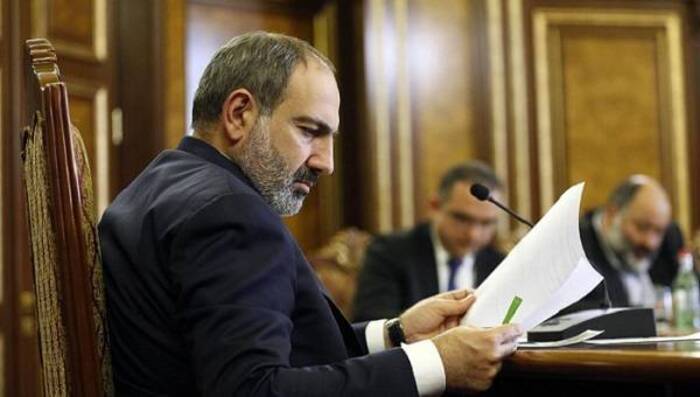
On the night of January 6, Armenian Prime Minister Nikol Pashinyan declared that the Collective Security Treaty Organization has decided to send peacekeeping soldiers to Kazakhstan for a short time in response to Kazakhstan's President Kasym-Zhomart Tokayev's appeal.
According to him, the decision was made because of the "danger to national security and sovereignty posed, among other things, by foreign influence." He didn't say which organisation or country was interfering with the Kazakh protest.
Belarus, Russia, Armenia, Kazakhstan, Kyrgyzstan, and Tajikistan are all members of the CSTO. The number of CSTO peacekeeping forces is officially 3,600.
The Russian State Duma's CIS Affairs Committee Chairman, Leonid Kalashnikov, stated that the CSTO 'peacekeepers' will only be defending local infrastructure and facilities. CSTO soldiers, on the other hand, would remain in place indefinitely, until the situation stabilised, according to a Russian official.
Tokayev has previously requested assistance from Russia, Belarus, Armenia, Kazakhstan, Kyrgyzstan, and Tajikistan's Collective Security Treaty Organization.
Protests in Kazakhstan, which is five times the area of France and has a population of roughly 19 million people, killed eight police and national guard men on Tuesday and Wednesday.
Protesters have been storming buildings and yelling against Tokayev's predecessor Nursultan Nazarbayev, who remained in power after stepping down in 2019 after nearly three decades in office.
The protests began on January 2, when drivers in the oil-rich Mangystau area of the nation held rallies against massive price spikes for liquefied petroleum gas (LPG), which eventually expanded to the city of Aktau.
Supportive protests in Atyrau, Aktobe, and Oral, in western Kazakhstan, where the country's petroleum and natural gas deposits are situated. The protests expanded to other parts of the country and erupted into public rallies.
To safeguard public safety as the demonstrations extended across the nation, Tokayev announced a state of emergency in Almaty and the Mangystau area from January 5 to 19. In Almaty, the country's former capital, he also enforced a curfew when thousands of people took to the streets.
Protesters retaliated with stones after police deployed stun grenades and tear gas to disperse them. There were also reports of clashes between police and protestors.
Tokayev accepted the government’s resignation in a presidential decree. Later, demonstrations reached a nationwide level, followed by a countrywide state of emergency.
The government also decided on 4 January to introduce price controls on LPG, gasoline, diesel fuel, and basic food products for 180 days.
Moreover, during widespread protests, members of the Organization of Turkic States stated their willingness to help Kazakhstan.
In a statement issued on January 4th, the organisation emphasised the significance of peace and stability while also expressing strong support with Kazakhstan, one of its member countries.
"(The organisation) expresses its faith in the Kazakh authorities' ability to peacefully reduce tensions and restore calm and order," it continued.