Azerbaijan supports Turkey-Armenia normalisation process
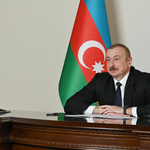
Azerbaijan fully supports the normalisation of relations between neighbouring Turkey and Armenia, Azerbaijani Foreign Minister Jeyhun Bayramov said 27 December.
Speaking at a year-end evaluation of Azerbaijan's foreign policy, Bayramov said Azerbaijan and Turkey favour relations with all countries based on international law.
“The basis for the normalisation of interstate relations can only be international law,” he said. “Both Azerbaijan and Turkey have always shown this attitude. We’re in favour of improving our relations with all countries and neighbours on the basis of international law, and we are doing this. The exception so far on this list has been Armenia. We offer the same proposal to Armenia,” he explained.
Turkish Foreign Minister Mevlüt Çavuşoğlu recently stated that Turkey and Armenia would meet for the first time in Moscow.
Ankara wishes to have direct communication with Yerevan before the official meeting, the FM said, noting that the two sides have selected special representatives.
"Direct engagement, including bilateral visits, must define a road plan stating what actions need to be made to restore relations," Çavuşoğlu stated.
"I hope Armenia continues on this course," Çavuşoğlu added, underscoring that Turkey is working with Azerbaijan on actions to be done with Armenia. “The sentiments coming from Armenia are encouraging, but we want to see action. We can move in a trilateral manner."
"Both Azerbaijan and Turkey may open their borders to Armenia if we get to the position we desire," he said, adding that such a decision would be taken in consultation with Baku.
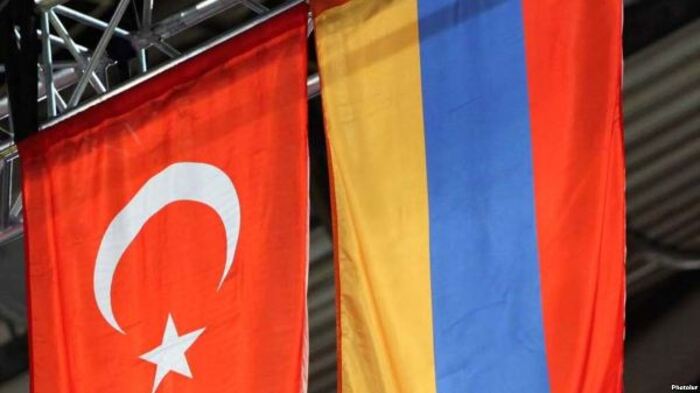
Following years of cold relations, Turkey and Armenia have proclaimed their intention to normalise relations as part of regional integration and cooperation initiatives in the South Caucasus. The two countries designated special envoys to improve relations earlier this month.
For decades, the two countries' borders have been blocked, and diplomatic connections have been suspended. In 2009, Armenia and Turkey signed a historic peace agreement to re-establish ties and open their shared border after decades of conflict, but the agreement was never ratified, and relations have remained tense ever since.
Turkey and Armenia will meet in Russia
Turkey and Armenia will hold their first discussions in Moscow, Foreign Minister Mevlüt Çavuşoğlu said to reporters on December 27 during an annual review conference in Ankara. Ankara wishes to have direct communication with Yerevan before the official meeting, the foreign minister said, noting that the two sides have selected special representatives.
"By engaging in direct touch, including bilateral visits, a road map indicating which actions need to be taken to restore relations has to be developed," Çavuşoğlu stated.
The two countries designated special envoys to improve relations earlier this month. Serdar Kilic, Turkey's former ambassador to the United States, has been nominated as a special envoy to Armenia to conduct normalisation talks.
For decades, the two countries' borders have been blocked, and diplomatic connections have been suspended.
Armenian-Turkish relations have been tumultuous throughout history. According to Turkey's account of the events of 1915, Armenians died in eastern Anatolia when some joined the invading Russians and revolted against Ottoman soldiers. The ensuing evacuation of Armenians caused in countless deaths, with both sides' army and militia groups carrying out atrocities.
Turkey objects to the presentation of the incidents as genocide but describes the 1915 events as a tragedy in which both sides suffered casualties.