EU approved EUR 13 million aid package for Georgia's defence capabilities

EU approved EUR 13 million aid package for Georgia's defence capabilities

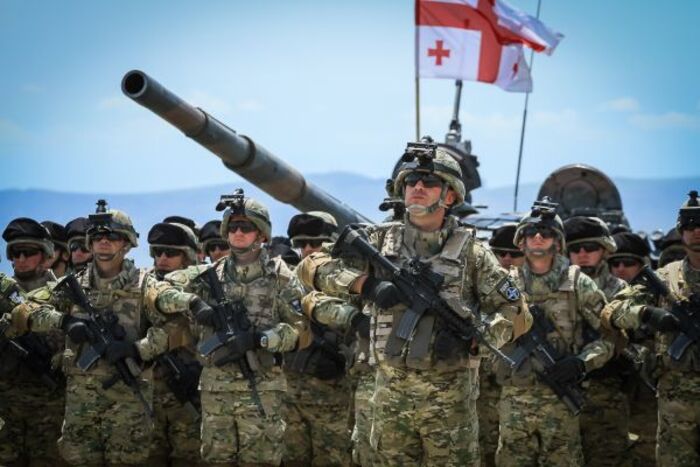
The European Union's Council approved a EUR 12.75 million support package aimed at bolstering Georgia's military and defence capabilities.

The EU will assist Georgia with non-lethal medical and engineering equipment, as well as civilian-type mobility assets, over the course of 36 months, in order to strengthen internal resilience and peace, according to the Council.

The EU Council underlined in its statement that "this support measure would help boost the capacity of the Georgian Defence Forces, especially their ability to deliver their services to citizens in crises or emergency circumstances."

The measure, which was approved under the European Peace Facility, the EU's off-budget funding mechanism, also intends to "improve the capability and interoperability of local armed forces to participate" to military missions and operations under the Common Foreign and Security Policy (CSPD).

Moldova and Ukraine, two additional EU-associated countries, will get EUR 7 million and EUR 31 million in support, respectively. Mali will get EUR 24 million in help in the meanwhile.
2476 Mal angesehen

ARTICLES IN ENGLISH»


MEISTGELESEN


AKTUELLES


OPINION


Call for Contributors: Caucasus Watch is looking for experts, journalists and fact-checking specialists!

“Caucasus Watch” is seeking local specialists from Georgia, Armenia, Azerbaijan and the North Caucasus region, to assist our research endeavours and help enrich our content.

“Caucasus Watch” is an independent platform, which provides coverage of recent developments in various locations of the Caucasus region for the German and overall European stakeholders. We are an international team of Caucasus enthusiasts and are currently looking for local contributors who focus on social, economic, political and security dynamics of the said region.

The platform offers: I) a flexible format of cooperation, as well as competitive remuneration; II) access to English and German speaking readership in the wider European region; III) an opportunity to join the network of regional specialists through the initiatives and events to be organized by the Caucasus Watch and partner institutions.

Interested individuals are asked to provide a CV and a cover letter along with an abstract or a writing sample (in English or German), to the following address: redaktion@caucasuswatch.de.

Additional questions can be directed to Igor Dostalik through: i.dostalik@caucasuswatch.de.