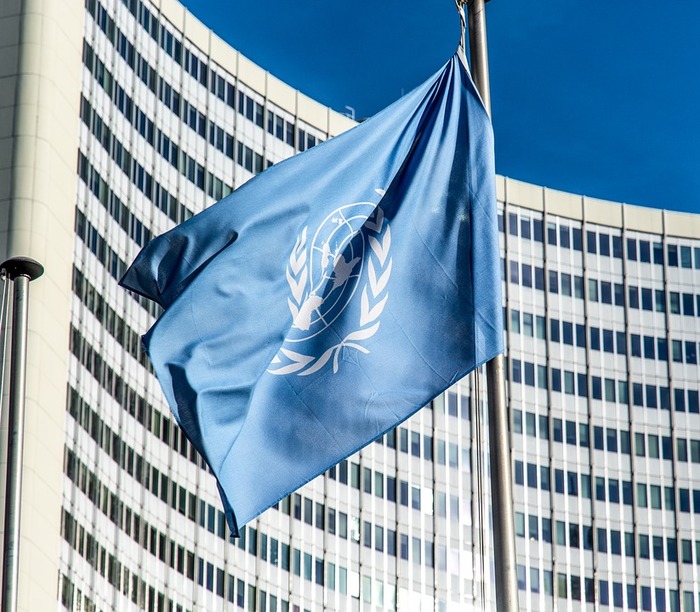
The United Nations’ top court has ordered both Armenia and Azerbaijan to work to prevent racial hatred and discrimination and ease their feud following last year's war between the South Caucasus neighbours over the breakaway Nagorno-Karabakh region. The International Court of Justice (ICJ) also told Azerbaijan on December 7 to protect Armenian prisoners from the conflict and to stop the desecration of Armenian cultural heritage.
The orders of the Hague-based court are subject to a full case review, which may take years to complete. Judges, on the other hand, have no practical means of executing their orders. Both Yerevan and Baku have asked the International Court of Justice (ICJ) to take immediate action against suspected violations of a UN convention against racial discrimination.
According to ICJ Chief Judge Joan Donoghue, two former Soviet republics "must avoid from any conduct that would exacerbate or extend the dispute before the court or make it more difficult to settle."
Azerbaijan "will comply with steps recommended by the court relating to avoiding racial discrimination, which reinforce existing treaty responsibilities that Azerbaijan takes seriously and is dedicated to preserving," according to a statement from the Foreign Ministry in Baku.
The Armenian administration did not respond immediately. Tensions have been simmering for years over Nagorno-Karabakh, an ethnic Armenian area that broke away from Baku's rule in the early 1990s and is officially recognised as part of Azerbaijan.
Last year, a six-week battle erupted, killing almost 6,500 people. The conflict came to an end with a cease-fire negotiated by Russia. Tensions along the border have remained high since then, with the most recent violent clashes taking place last month.
On December 7, the International Court of Justice (ICJ) ordered Azerbaijan to "protect from violence and physical injury" all Armenian war detainees and guarantee that they are treated fairly, as well as to avoid "vandalism and degradation" of churches and other Armenian cultural treasures.
According to the ruling, both Azerbaijan and Armenia must "take all necessary steps to avoid the instigation and promotion of racial hate and prejudice" against each other. In Azerbaijan, the directive affected "officials and institutions," whereas in Armenia, it affected "organisations and private individuals."
The International Court of Justice dismissed Azerbaijan's request for Armenia to stop laying land mines and provide over mine maps, ruling that the request was not covered by the International Convention Against All Forms of Racial Discrimination (CERD).
Armenia accused Azerbaijan of promoting a "cycle of hatred" during proceedings in October, while Baku accused Yerevan of "ethnic cleansing."
The International Court of Justice's decisions came only days after Azerbaijan declared on December 4 that it had released ten Armenian troops captured amid fatal border confrontations in mid-November.
In exchange, Armenia provided maps showing the locations of minefields. At a meeting in Russia's Black Sea resort of Sochi on November 26, Azerbaijani President Ilham Aliyev and Armenian Prime Minister Nikol Pashinyan agreed to calm tensions.