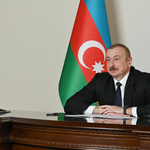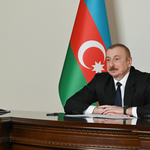
Prime Minister Irakli Garibashvili revealed plans to replace Georgia's "faulty" social policy system with a "healthier" alternative, which would give employment in the public sector instead of social allowances to residents who are eligible to work, at a government meeting.
“With current social policy, we accustomed adult labour force, our citizens, to unemployment, poverty, and inaction,” the Prime Minister said, vowing to instead create a “flexible system” where citizens will earn their social assistance as salaries.
Besides, the PM continued, “they need to have a possibility to work extra and feel free to work at two or three places and earn income from multiple parallel sources.” “Our citizens should get used to work.”
Socially vulnerable persons who can work are not encouraged to start a new career or better their fundamental living conditions, according to the Prime Minister, because they are afraid of losing their social assistance. According to Garibashvili, at least 200,000 of the 600,000 disadvantaged persons getting social assistance fell into this group.
Levan Davitashvili, the Deputy Prime Minister, will lead the task team charged with preparing the new program that the Prime Minister hopes to introduce in January of next year.
Critics questioned the Prime Minister's assertion that the system discourages people from looking for work. Even under the existing system, according to Tatuli Chubabria of the Social Justice Centre, a local CSO, receivers of social help may work without fear of losing their benefits. She also dismissed the PM's claim that 200,000 people are unemployed, pointing to the country's high rate of informal economy employment.
According to the latest figures, 633,586 people or 171,724 households recieved a GEL 43,38 million subsistence subsidy in October (USD 13,88 million). In January, the statistics were 532,242 and 148,653, respectively, with GEL 29,81 million spent on sustenance (USD 9.5 million).
The amount of social assistance supplied to each family varies. Social workers assign points to the families and rate them. Those who score fewer than 30,001 points earn the most money – 60 GEL (19.20 USD) per family member – while those who score between 60,001 and 65,001, the maximum acceptable score, receive 30 GEL (9.60 USD) per family member. In addition, households with a score of less than 120,001 points get GEL 100 in financial help for each family member under the age of 16.