Following reports earlier this week that Yerevan had requested that a reconciliation effort be facilitated, Russia has stated that it is willing to arbitrate attempts to mend relations between Armenia and Turkey.
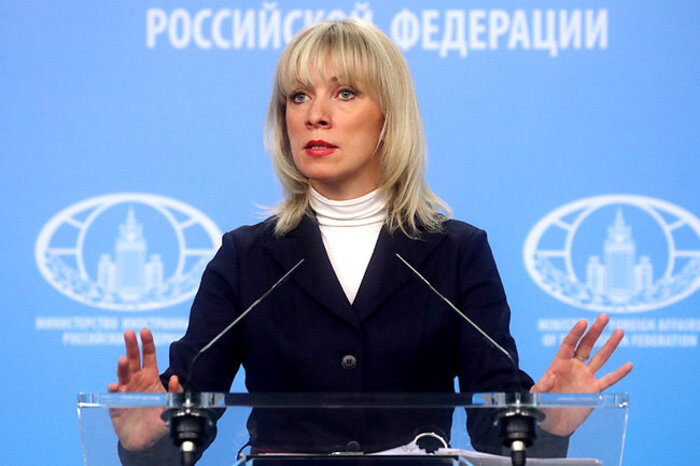
Normalisation between the neighbours "would surely help to the improvement of the overall situation in the area," Russian Foreign Ministry spokesperson Maria Zakharova said during a news conference on November 25.
Armenia and Azerbaijan, both former Soviet republics, waged a six-week war last year over the separatist Nagorno-Karabakh territory, which had been ruled by ethnic Armenians for over three decades.
Turkey, a NATO member, backed Azerbaijan in the conflict, which concluded in November 2020 with a Russian-brokered ceasefire allowed Azerbaijan to reclaim control of sections of Nagorno-Karabakh and surrounding area, with Russian peacekeepers on the ground.
Turkey has maintained its border with Armenia closed for over three decades, citing Armenian possession of Nagorno-Karabakh and surrounding Azerbaijani land as the reason, a problem that was settled by the cease-fire agreement.
Vahan Hunanian, a spokesperson for the Armenian Foreign Ministry, shared that Yerevan had notified Moscow that it was willing to normalise relations with Ankara without preconditions and had requested Moscow's assistance in the process.
"Our country is ready to further promote this process [of Armenian-Turkish rapprochement] in every possible way," Russian spokeswoman Zakharova said. "The launch of this process, as we believe, would undoubtedly contribute to the improvement of the general situation in the region."
She added that Russia was "taking all measures to restore economic ties and transport links in the region."
In August, Armenian Prime Minister Nikol Pashinyan and Turkish President Recep Tayyip Erdogan released public remarks noting mutual "good signals" for mending relations through multiparty regional discussions that included Russia.
Pashinyan highlighted Yerevan's willingness to improve relations with Ankara on November 23.
However, he warned that such a procedure would be impossible to achieve if Turkey insisted on building a corridor connecting Azerbaijan to its western Nakhchivan exclave via Armenia.
One point of the tripartite agreement that ended the war includes the "unblocking of regional economic and transport links." Such a corridor would give Ankara long-sought direct land access to its Turkic cousin through Nakhchivan, with which Turkey shares a border.
"We want to normalise our relations with Turkey," Pashinyan said. "We cannot discuss any corridor issue. But we want to discuss the opening of regional transport links."
In an interview earlier this month with Le Figaro, Armenian Foreign Minister Ararat Mirzoyan accused Ankara of setting new conditions for a dialogue with Yerevan, including such a corridor, which he called unacceptable.