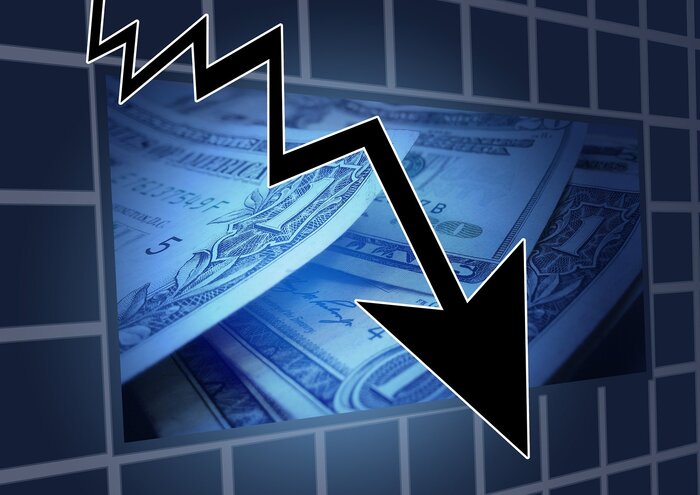
Georgia's debt has hit the limit

Georgia's debt has hit the limit

Under a 2011 law aimed to shield the country against exorbitant interest rates and other macroeconomic dangers, the government's debt ceiling is set at 60% of GDP.

According to Finance Ministry estimates, government debt, both domestic and foreign, grew by $2.3 billion, or 33%, as authorities expanded social expenditure last year. When measured in the volatile Georgian lari, the debt-to-GDP ratio momentarily surpassed 60% when combined with a 6.2% drop in production. The lari has now steadied, even recouping some of its losses, and presently sits at approximately 57%. The rate of expansion has accelerated.

Garibashvili presented parliament with a budget for 2022 that relies on borrowing additional 3.1 billion lari (just under $1 billion) from international lenders. The budget was announced just weeks after Garibashvili turned down a 75-million-euro loan from the European Union, stating that Georgia's economy was developing faster than planned and that the money was unnecessary. Earlier, Georgia was rejected by the EU due to its democratic backsliding.

Foreign direct investment has also declined, which had been declining prior to the pandemic. According to Georgia's National Statistics Office, foreign direct investment plummeted to its lowest level in 15 years in 2020, much worse than during the Great Recession.

1651 Mal angesehen

ARTICLES IN ENGLISH»


MEISTGELESEN


AKTUELLES


OPINION


Call for Contributors: Caucasus Watch is looking for experts, journalists and fact-checking specialists!

“Caucasus Watch” is seeking local specialists from Georgia, Armenia, Azerbaijan and the North Caucasus region, to assist our research endeavours and help enrich our content.

“Caucasus Watch” is an independent platform, which provides coverage of recent developments in various locations of the Caucasus region for the German and overall European stakeholders. We are an international team of Caucasus enthusiasts and are currently looking for local contributors who focus on social, economic, political and security dynamics of the said region.

The platform offers: I) a flexible format of cooperation, as well as competitive remuneration; II) access to English and German speaking readership in the wider European region; III) an opportunity to join the network of regional specialists through the initiatives and events to be organized by the Caucasus Watch and partner institutions.

Interested individuals are asked to provide a CV and a cover letter along with an abstract or a writing sample (in English or German), to the following address: redaktion@caucasuswatch.de.

Additional questions can be directed to Igor Dostalik through: i.dostalik@caucasuswatch.de.