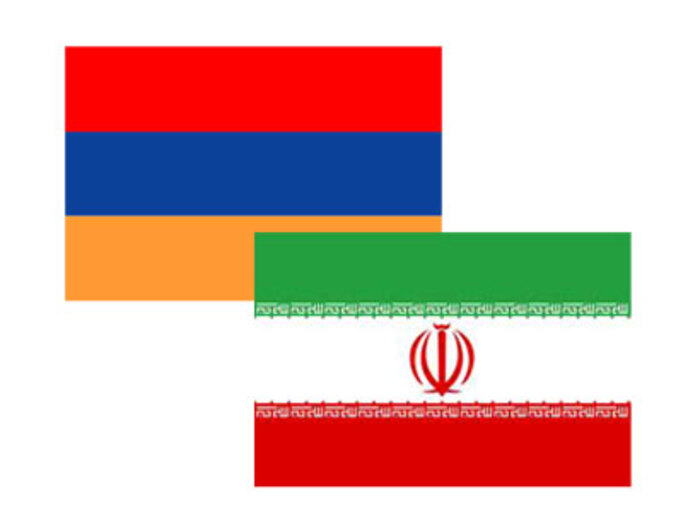
On 25 May, Armenia's Acting Minister of Economy Vahan Kerobyan and Iranian Minister of Roads and Urban Development Mohammad Eslami signed a Memorandum of Understanding which provides for the creation of a joint working group that will study the procedures, which impede trade and economic relations between the countries and make proposals for their elimination.
Kerobyan said that the Armenian side is interested in expanding mutually beneficial cooperation and trade and economic relations with Iran. In turn, Eslami confirmed the readiness of the Iranian side to deepen economic ties with Armenia, expressing confidence that the great potential of cooperation between the countries can be realised by involving the Armenian-Iranian companies in joint programs.
During the meeting, a wide range of issues of mutual interest were discussed, including investments, improving logistics infrastructure, simplifying, and regulating procedures for the transportation of goods, as well as tariffs for the transit of Iranian goods through Armenia. The sides also discussed the opening of new direct flights between Armenia and Iran, which may become an additional impetus for the activation of the tourism sector.
A day earlier, Eslami met with Armenia’s acting Minister of Territorial Administration and Infrastructure Suren Papikyan to discuss ways of improving transport links between the two neighbouring states. A statement by Papikyan’s press office said that he briefed Eslami on the Armenian government’s plans to rebuild or repair key highways passing through the Syunik province. The statement said Eslami expressed the Iranian side’s desire to participate in the planned roadwork. Papikyan told him that Yerevan is ready to hire Iranian construction firms for that purpose.
Both men were reported to reaffirm their governments’ commitment to an ambitious project to create a transport corridor that would connect Iran’s Persian Gulf ports to the Black Sea through Armenia and Georgia. Papikian also said his ministry is working on a bill that would sharply cut transit fees for Iranian firms using Armenian territory for cargo shipments to and from the Islamic Republic.
The head of Armenia’s State Revenue Committee (SRC) Edvard Hovannisyan also met with the chief of Iran’s customs service Mehdi Mirashrafi in Tehran. According to the SRC, the talks focused on the upcoming modernisation and expansion of Armenia’s sole border crossing with Iran. Hovannisyan was cited as saying that the new border facilities will facilitate cargo shipments between the two countries and thereby boost bilateral trade.
The talks held in Yerevan and Tehran came amid the continuing Armenian-Azerbaijani border standoff. Armenia’s acting Foreign Minister Ara Ayvazyan and the Iranian ambassador in Yerevan, Abbas Badakhshan Zohouri, also discussed the matter when they met on 24 May. The Armenian Foreign Ministry said Ayvazyan “stressed the imperative of the immediate and unconditional withdrawal of Azerbaijani forces that infiltrated Armenia’s sovereign territory.” Meanwhile it was announced that Iran’s Foreign Minister Mohammad Javad Zarif would visit Baku on 25 May and Yerevan on 26 May respectively.