120 000 aserbaidschanischen und 61.000 armenischen Staatsbürgern droht Abschiebung aus Russland

120 000 aserbaidschanischen und 61.000 armenischen Staatsbürgern droht Abschiebung aus Russland

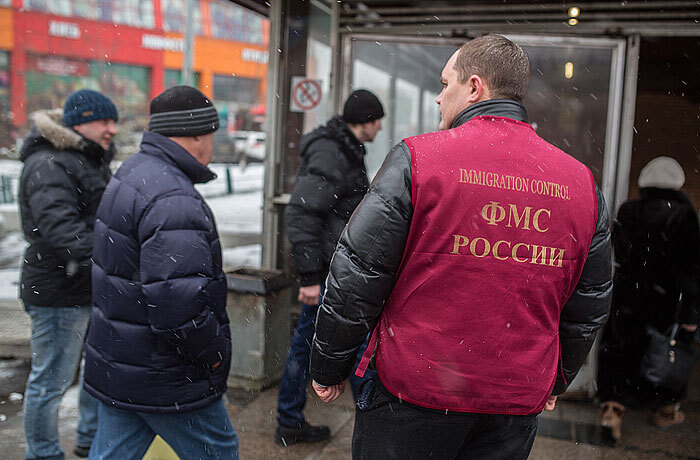
Das russische Innenministerium fordert von den GUS-Staaten, dass ihre Bürger, die sich illegal in Russland aufhalten, das Land bis zum 15. Juni verlassen, erklärte der stellvertretende Innenminister der Russischen Föderation, Alexander Gorovoy, bei einem Treffen der Parlamentarischen Versammlung der GUS.

Nach den Statistiken des russischen Innenministeriums gibt es heute in Russland mehr als 332.000 illegale Migranten aus Usbekistan, 247.000  aus Tadschikistan, 152.000  aus der Ukraine, 120.000  aus Aserbaidschan, 115.000  aus Kirgisistan, 61.000 aus Armenien, 56.000 aus Moldawien und 49.000 aus Kasachstan.

„Wenn wir diese Zahl nicht bis zum 15. Juni reduzieren, werden diese Menschen abgeschoben und die Grenzen geschlossen werden. Ich möchte, dass in den Medien der betroffenen Staaten entsprechende Aufklärungsarbeti durchgeführt wird”, sagte Gorovoy.

Mitte Dezember verlängerte Wladimir Putin durch sein Dekret den vorübergehenden Aufenthalt von Migranten in Russland im Zusammenhang mit dem Coronavirus bis zum 15. Juni 2021.

7271 Mal angesehen

ARTICLES IN ENGLISH»


MEISTGELESEN


AKTUELLES


OPINION


Call for Contributors: Caucasus Watch is looking for experts, journalists and fact-checking specialists!

“Caucasus Watch” is seeking local specialists from Georgia, Armenia, Azerbaijan and the North Caucasus region, to assist our research endeavours and help enrich our content.

“Caucasus Watch” is an independent platform, which provides coverage of recent developments in various locations of the Caucasus region for the German and overall European stakeholders. We are an international team of Caucasus enthusiasts and are currently looking for local contributors who focus on social, economic, political and security dynamics of the said region.

The platform offers: I) a flexible format of cooperation, as well as competitive remuneration; II) access to English and German speaking readership in the wider European region; III) an opportunity to join the network of regional specialists through the initiatives and events to be organized by the Caucasus Watch and partner institutions.

Interested individuals are asked to provide a CV and a cover letter along with an abstract or a writing sample (in English or German), to the following address: redaktion@caucasuswatch.de.

Additional questions can be directed to Igor Dostalik through: i.dostalik@caucasuswatch.de.