Inter-party relations
On 19 October, Georgia’s Prime Minister Giorgi Gakharia assured that there would be no postponement of the elections, despite the country registering a sharp rise of Covid-19 infections in the past weeks (currently stands at 18 663 cases in total, and 143 reported deaths). He added that the government's strategy for fighting the pandemic is changing and is aimed at adapting to the virus. “We will no longer announce lockdown. There is no need for this, and the country's economy simply cannot withstand it. In addition, considering that there will be no vaccine tomorrow or the day after tomorrow, coexistence with the virus and fight against the virus will be a long-term process,” Gakharia added.
However, patients infected with Covid-19 placed in clinics and those in isolation will be able to participate and vote in upcoming parliamentary elections through the portable ballot boxes. The boxes will be delivered to them by the members of a specially created commission.
On 16 October the opposition United National Movement (UNM) – Strength in Unity party held an outdoor presentation of its majoritarian candidates and election programme in the Black Sea town of Batumi. However, despite the Covid-19-related safety recommendations, not all of the participants wore face masks and social distancing was not maintained. UNM leader Grigol Vashadze told journalists that despite the threat from the coronavirus, this was an election period and therefore his party could not be able to suspend election campaigning. Georgia’s Public Defender Nino Lomjaria condemned the rally, saying that it was “completely irresponsible” on the part of the UNM.
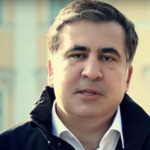
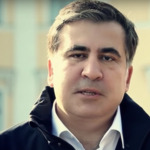
Speaking about the UNM, Georgia’s Defence Minister Irakli Garibashvili accused the UNM’s candidate for the Prime Minister spot Mikhaeil Saakashvili to be a “Russian man” who gave strategic facilities to Russia before and after the Russia-Georgia 2008 war. “It was Saakashvili who gave Enguri HPP, Zhinvali HPP, Rioni HPP, Gumati 1 and Gumati 2 HPPs, Shaori HPP, Vartsikhe and Khrami HPPs to RAO and other Russian state companies before and after the war,” Garibashvili told Imedi TV.
On the opposite side, the UNM majoritarian candidate for Isani constituency Khatia Dekanoidze accused the ruling Georgian Dream (GD) party of attempting to instal audio surveillance equipment in her election headquarters last night. Dekanoidze uploaded photo and video footage on her Facebook page, calling on the interior ministry to investigate the incident in a timely manner.
Election-relevant studies
The OSCE Office for Democratic Institutions and Human Rights (ODIHR) published their interim report on the pre-election environment in the country. The report stated that ‘the environment was marked by political and social tensions, and economic challenges’ amid the ongoing COVID-19 pandemic. ODIHR also noted that the campaign ‘is prominent mostly in the media and online,’ while campaign events ‘are exempt from Covid-19 related restrictions in force with respect to other social activitie.’ The report also emphasised that the campaign has centred on personalities rather than substantive issues.
Transparency International Georgia published their survey on the business activities of the majoritarian candidates of the most relevant political parties running for the elections. According to the survey, 7 out of 20 majoritarian candidates nominated by the European Georgia party were businessmen, connected with 15 companies. 16 candidates, their family members and business partners have contributed 466,818 lari to the party between 2017-2020, with Giga Bokeria contributing the most - 147,900 lari. 2 out of 20 Strategy Agmashenebeli majoritarian candidates were connected with 4 companies and they have donated 194,500 lari so far. 14 of 29 majoritarian candidates nominated by the Alliance of Patriots are businessmen and are connected with 24 companies. Nine majoritarian candidates have contributed 362,530 lari to the party for the upcoming elections. 3 out of 10 majoritarian candidates nominated by the Labour party were businessmen connected to 4 companies. Seven majoritarian candidates have contributed 41,845 lari to the party between 2014 and 2020. The surveys on GD and UNM were released earlier (Caucasus Watch reported).
Another interesting study was conducted by the National Democratic Institute (NDI) which analysed the gender quotas within the majoritarian candidates of the parties since the adoption of the constitutional changes in June 2020. The “For Justice” party led by Eka Beselia had the most nominated female candidates (11), followed by Strategy Agmashenebeli (8), United Georgia (7), and the Alliance of Patriots, European Georgia and Citizens party (all three 6 candidates). Both GD and UNM had 5 women nominated within their top candidates.