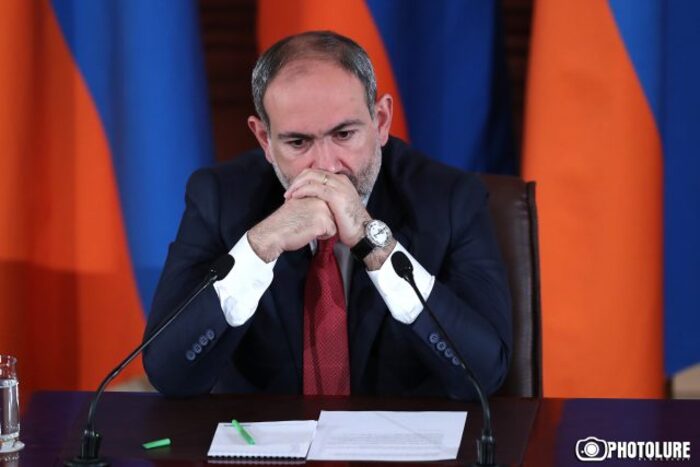
On 10 August, Armenia’s Prime Minister Nikol Pashinyan sent his congratulations to the Belarusian President Alexander Lukashenko, following the controversial presidential election poll results in Belarus.
He expressed confidence that Belarus and Armenia will strengthen the friendship between their peoples and expand mutually beneficial cooperation both in the bilateral format and within the framework of international organizations and integration associations. “For my part, I am ready to make efforts so that we fully realize the full potential of cooperation between our peoples and countries. Taking this opportunity, I wish you good health, and peace and prosperity to the brotherly people of Belarus," Pashinyan said.
Pashinyan’s hasty congratulations to Lukashenko sparked negative reactions from the Armenian NGO scene. Armenia’s leading human rights activist Artur Sakunts believes that in such conditions a hasty congratulatory message from a leader like Pashinyan, who came to power due to mass street protests, was unacceptable. “How can a state whose prime minister congratulates dictator Lukashenka later prosecute Kocharian for the same? This is a complete anachronism of values and principles... This is just absurd,” he tweeted.
Other members of Armenia’s civil society also expressed their discontent with Pashinyan’s recent move. The statement “totally validates all of the people who say that the Velvet Revolution changed nothing in Armenia and that Armenia is Russia's backyard,” tweeted digital media analyst Zarine Kharazyan. Gegham Vardanyan, another Armenian journalist, labelled the move simply as a “disgrace.” The Turkey/Caucasus editor at Eurasianet Joshua Kucera even pointed out that Lukashenko, in a pre-election ad, even cited Armenia as a negative example of a “colour revolution” that he would prevent for the sake of Belarus’s stability.
The head of the foreign relations committee in Armenia’s parliament Ruben Rubinyan dismissed the criticisms directed towards Pashinyan, saying that he sees nothing unacceptable in it. “In general, international relations are different from domestic politics. International partnership, relations between the heads of state have a different level and have other components,” he said.
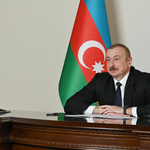
Azerbaijani President Ilham Aliyev also sent his congratulations to Lukashenko, while the Georgian officials remained reluctant to congratulate him, as the protests in Belarus are still ongoing. Besides Aliyev and Pashinyan, Russian President Vladimir Putin, as well as his Chinese counterpart Xi Jiping sent their congratulatory messages to Lukashenko. Ukrainian President Volodymyr Zelensky sent a more reluctant message, saying that “it is obvious that not everyone in Belarus agrees with the announced provisional election results” and adding that such doubt in Belarus is a “direct road to violence, conflict and growing public outcry.”
On the other side of the spectrum are the western countries, whose reactions to the election results were critical. European Commission President Ursula von der Leyen urged Minsk “to ensure that the votes in yesterday's election are counted and published accurately” and criticized the crackdown on opposition demonstrators, saying “harassment and violent repression of peaceful protesters has no place in Europe.” The spokesperson of the German Chancellor Steffen Seibert said that Germany has “strong doubts” about the conduct of the elections and that “minimum standards for democratic elections” in Belarus were not met. The press secretary of the US President Kayleigh McEnany said that the US was “deeply concerned” by the presidential elections in Belarus, adding that “intimidation of opposition candidates and the detention of peaceful protesters” were among numerous factors that “marred the process.”
Hours after the national vote in Belarus, protesters took to the streets calling for a nationwide strike and demanding the recognition of the candidate from the united opposition Sviatlana Tsikhanouskaya as the new President of Belarus. They also called for the release of all political prisoners and for new and fair elections in the country. It was reported during the first day of the protests that 1,000 people were arrested in Minsk and another 2,000 in the rest of the country. One protester died, while 50 protesters and 39 police officers were injured during the first day of the protest, according to reports.