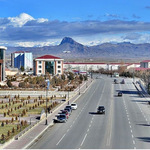

On 4 June, the coronavirus task force under the Cabinet of Ministers announced the introduction of a strict quarantine regime in the cities of Baku, Sumgait, Ganja, Lankaran and Absheron region from 6 to 8 June. Under the new lockdown rule, the residents of the cities would be forbidden to leave their place of residence unless there is immediate danger of life and health and in order to attend the funeral of a close relative.
According to the decision, during this period all work and services, including trade, in all the above-mentioned regions would be suspended. An exception will be the work of hospitals and ambulances, social services institutions, as well as the care of people in special need. The ban also would not apply to utilities, production and supply of electricity, communication services, broadcasting, including cable TV, freight by rail, road and air, pipelines and transport, continuous production, refining, storage and sale of oil and gas, and also the protection and technical safety of areas where activities were suspended.
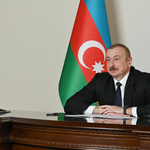
Speaking on the matter, Azerbaijan’s Prime Minister Ali Asadov stressed that the decision had to do with the dramatic increase in the number of infected cases after relaxation of the quarantine regime on 27 April, in which the residents of the regions stopped complying by the anti-coronavirus prevention rules. “If the number of cases of infection increases in other cities and regions, strict quarantine measures will be applied there as well,” Asadov added.
The chairman of the Board of Administration of Regional Medical Divisions (TABIB) Ramin Bayramli noted that the results achieved by the countries with lockdowns on weekends and holidays are well known. “There are positive results in this area. We will be able to provide information about the obtained achievements after 7-10 days. The analysis shows that the positive influence will be witnessed. People should also comply with rules without fail during the week,” he said.
Bayramli also stressed that it is not a second wave of infections in the country, but a result of residents in the 4 cities not following the instructions issued by TABIB. “It is not a second wave. We are at the beginning stage of the pandemics currently. We witness statistical indicators are not in the direction, which we want, after removing the tough quarantine regime,” he said.
The World Health Organization (WHO) representative in Azerbaijan Hande Harmanci also voiced her support in favor of the measure. “The number of infection cases which was 25 rose to 100 [within] twelve days after April 27. Today there are more than 200 infection cases [per day]. As infection cases increase, the states are forced to take strict measures again. Those steps are also being taken in Azerbaijan. When the states lift restrictions the number of infection cases increase,” she stated.
Azerbaijan witnessed a steady spike of new Covid-19 cases in recent days. On 3 June, 325 new cases of Covid-19 infection were recorded in Azerbaijan, which marked the largest daily increase in Azerbaijan since the start of the pandemic. In the past 24 hours, 262 new cases were reported in the country bringing the total tally to 6522 with 78 reported deaths.