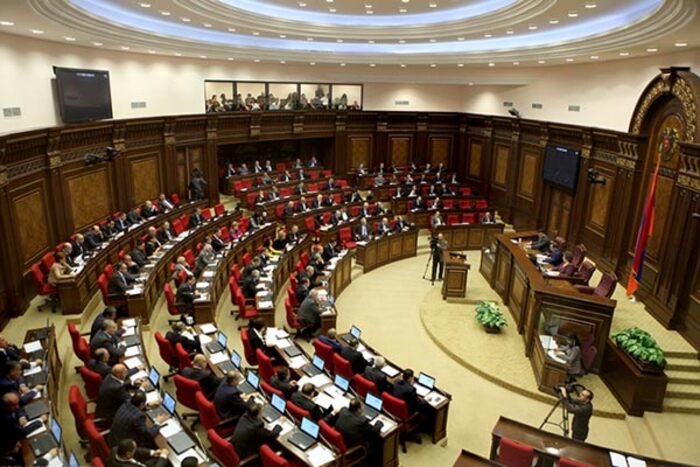
On 11 may, Armenia’s National Assembly ratified the Lanzarote Convention on the Protection of Children against Sexual Exploitation and Sexual Abuse with 79 voting for and 12 against, reported OC Media.
The Convention aims to ‘prevent and combat the sexual exploitation and sexual abuse of children’, ‘protect the rights of child victims of sexual exploitation and sexual abuse’, and ‘promote national and international cooperation against sexual exploitation and sexual abuse of children’. By ratifying the Lanzarote Convention Armenia is committing itself to the implementation of ‘legislative or other measures to encourage awareness of the protection and rights of children among persons who have regular contacts with children in the education, health, social protection, judicial and law-enforcement sectors and in areas relating to sport, culture and leisure activities.’
During the hearing, opposition Prosperous Armenia parliamentarian Gevorg Petrosyan announced that his party would be voting against the bill. “We do not want to blame anyone; however, we are reiterating our concern that certain clauses in the convention reasonably threaten the interests of our children’s rearing,” he said. According to Petrosyan, the Armenian Apostolic Church had also raised concerns over the convention.
The Armenian conservative NGO Kamq also protested against the ratification of the document in front of the parliament building. One of the main contentions they had with the convention was the phrase ‘sexual orientation’ in the non-discrimination clause which states that the provisions of the Convention ‘shall be secured without discrimination on any ground such as sex, race, colour, [...] sexual orientation, state of health, disability or other status’. Protesters told the ruling My Step parliamentarian Vahe Ghalumyan as he was entering the building that they demand that the parliament doesn’t legalise homosexuality.
The My Step parliamentarian Tatevik Hayrapetyan told protestors that the Convention was a tool to impose stricter punishments for child molestation. Another My Step parliamentarian Maria Karapetyan stressed that crimes against children are taking place online with growing frequency and that children need to learn how to use the internet properly. Responding to concerns made over the word ‘sexual orientation’, Karapetyan said that the phrase inclusion simply meant that the sexual orientation a child victim of sexual abuse should not be a part of the ‘foundation’ of the investigative process into the crimes committed against them.
Karapetyan also commented on the topic that the Lanzarote Convention was paving way for Armenia to ratify the Istanbul Convention, stating that the two are different documents and are not connected to each other.
The Istanbul Convention is a document that was adopted by the Council of Europe in 2011. It is a new milestone agreement of the Council of Europe that opens the way for the creation of a Europe-wide legal framework to protect women against all forms of violence and to prevent and prosecute and eradicate violence against women and domestic violence. On 3 July 2019, the Armenian government and the Council of Europe launched a joint program to prevent and punish domestic violence in the country with the hopes to ratify the Istanbul Convention by in September (Caucasus Watch reported). The ratification of the document was delayed due to the protests of the Armenian Church, Prosperous Armenia officials and civic activists that the convention threatens traditional Armenian values.