
On 11 March, the World Health Organization (WHO) officially declared the worldwide outbreak of the new coronavirus a "pandemic," with more than 118,000 cases in 114 countries and 4,291 deaths so far. "We have called every day for countries to take urgent and aggressive action. We have rung the alarm bell loud and clear," the statement added.
All three South Caucasus countries recorded a rise of people infected by the virus in the past few days.
Armenia
On 11 March, 3 more people have been recorded as infected with the virus, bringing the overall number up to 4.
The Armenian Prime Minister Nikol Pashinyan assured that there should be no reason to panic. “All three [new cases] had arrived from Italy,” he said, adding that authorities are currently looking to determine the scope of their contacts for further quarantine, which, “according to preliminary data, is not large”.
He also spoke as to why Armenia hesitated to stop flights from Italy to Armenia. “Anticipating criticism as to why no decision had been made to stop flights from Italy, I’d say that we have discussed this possibility several times, arriving at the obvious conclusion that potential carriers could come to Armenia from countries neighboring Italy -- France, Austria, because no borders are used inside the EU. That is to say, we would have to shut down other European destinations following the same logic, especially since the coronavirus infection is spreading to other European countries as well. Now the airlines have decided to stop flights from Italy,” he wrote.
Pashinyan also said that his campaign rallies ahead of the 5 April constitutional referendum will continue. “As you see, at the moment the campaign is ongoing. If there is a need to suspend it, we will do so. As long as we don’t do so, it means there is no need for doing that,” he said.
At a cabinet meeting, Armenia’s ombudsman Arman Tatoyan referred to the possibility of postponing classes in schools. Armenia’s Deputy Prime Minister Tigran Avinyan claimed that such decisions need concrete groundings which will testify that the virus has already spread. “Our cases are very localized, very concrete, these are people who were initially under control,” Avinyan said, adding that there is no need to discuss such issue yet and no need to panic either.
Azerbaijan
Azerbaijan has 15 reported cases so far.
On 9 March, the Azerbaijani law enforcers confiscated more than 1 million medical masks from several groups, including foreigners, who planned to illegally smuggle them out of the country. The Interior Ministry said that the smugglers, who have been detained by police, included Iranian, Chinese, and Azerbaijani nationals.
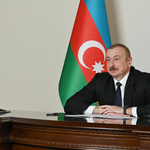
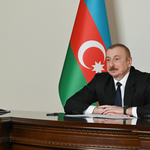
Azerbaijani President Ilham Aliyev expressed his confusion about a reported shortage of masks in the country. “I am told that there is a shortage of masks in pharmacies of late. It is impossible to find an explanation for this because we have a sufficient supply of masks,” he said.
“All law enforcement agencies have been instructed to identify such facts and apply the most severe punishment to those committing this. After all, those taking advantage of the situation to resort to unsightly actions in pursuit of their selfish interests should face the most severe punishment,” he added.
Azerbaijani schools, universities and kindergartens will remain closed in the country until April 1 as a measure to prevent the spread of the new coronavirus.
An Azeri woman who was quarantined after returning from Iran has died from coronavirus, Azerbaijan's first death from the virus, the country's emergency crisis center said on 11 March. The woman was found to have a serious autoimmune disease and was also suffering the last stage of chronic renal and respiratory failure, the center said in a statement. Members of her family have been placed in quarantine.
Georgia
The number of infected individuals in Georgia increased to 24.
Georgian Prime Minister Giorgi Gakharia said that the Georgian government has imposed restrictions on their citizens arriving from China, Iran, South Korea, Italy, Germany, France, Austria, and Spain. All Georgian citizens returning from these countries would be placed under 14-day quarantine.
Gakharia added that all government agencies will now work under an emergency regime. “Every government agency is moving towards 24/7 work schedule in the given emergency conditions. It particularly applies to the Ministries of Health, Interior, Education and Justice, along with those of Foreign Affairs and Finance through subsidiaries of the latter that operate at the border of the country,” he said.
Georgian schools, universities and kindergartens will remain closed in the country until April 1 as a measure to prevent the spread of the new coronavirus.