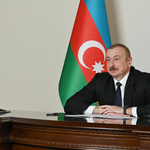
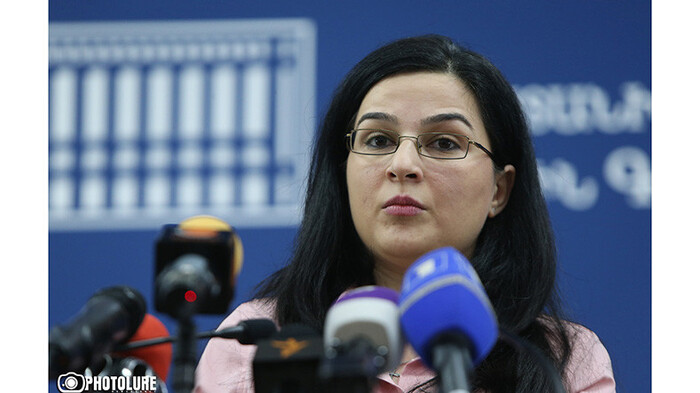
On 4 October, spokesperson of the Armenian Ministry of Foreign Affairs Anna Naghdalyan responded to the statement made by Azerbaijani President Ilham Aliyev at the Valdai Discussion Club in Sochi (Caucasus Watch reported).
“The maximalist stance of Azerbaijan, which has been the main and essential threat to the peace process, remains unchanged even despite the recent agreements reached, which implies preparing people for peace. The formula proposed by… Prime Minister Nikol Pashinyan - the settlement should be acceptable to the people in Armenia, Nagorno-Karabakh and Azerbaijan - is aimed at bringing that very commitment to prepare people for peace to a more practical dimension,” she said. She added that this formula is aimed at making the idea of compromise acceptable to all sides, engaging societies in creating an environment conducive to peace, as well as enshrining the responsibility and accountability of the leaders before their people.
"In his response to the Armenian side, President of Azerbaijan made no reference to the necessity of [a] peaceful solution for the people of the region. In order to substantiate its maximalist approach Azerbaijan has always used rhetoric of dehumanizing [the so-called Republic of Nagorno-Karabakh] and the Armenian people overall. Effectively countering this threat is an all-Armenian issue, which was best formulated through the commitment undertaken by the authorities of Armenia before the people of Nagorno-Karabakh, on 5 August [Caucasus Watch reported],” she added.
Besides Naghdalyan, Ruben Rubinyan, the Armenian representative in the Parliamentary Assembly of the Council of Europe (PACE) also expressed his concerns in regard to Aliyev’s statement. “Azerbaijan does not want any peaceful resolution in essence,” he said, adding that Aliyev’s rhetoric is clear proof that Azerbaijan does not pursue any constructive position. Asked to comment on the viability of the statement in the light of the recent cross-border incidents, Rubinyan stated that he treats it as yet more proof that ″Azerbaijan won't accept the only available formula proposing the conflict settlement and sticks instead to its belligerent language.″
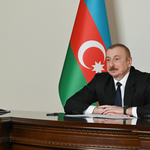
Aliyev, on the other hand, stated in Sochi that the concept of “the people of Nagorno-Karabakh” does not exist. “In Soviet times, the Nagorno-Karabakh autonomous region was set up. In 1921 the decision of the Caucasian Bureau was literally to leave Nagorno-Karabakh within Azerbaijan, not transfer it, as the Armenian side often interprets it. Before the conflict began, the Azerbaijani and Armenian populations in the proportion of 25 to 75 percent lived in the Nagorno-Karabakh autonomous region of the Azerbaijan SSR. As a result of the conflict, the entire Azerbaijani population was expelled from Nagorno-Karabakh, as well as from seven other districts of Azerbaijan. Today there is no Azerbaijani population in the occupied territories, while most of the occupied territories are scorched and destroyed lands,” he said.
Meanwhile, the spokesperson of the Russian MFA Maria Zakharova confirmed that the US, French and Russian co-chairs of the OSCE Minsk Group will visit the South Caucasus for talks on the Nagorno-Karabakh conflict settlement. She said the visit has been agreed on with the Azerbaijani and Armenian Ministers of Foreign Affairs. According to Zakharova, the timing is being finalised and it will be announced shortly
Zakharova was also asked to comment on the statement by Russian Foreign Minister Sergey Lavorv that the conflict negotiation process could be reinforced by the restoration of direct negotiations. She was asked to specify what Lavrov meant by saying direct negotiations - either direct talks between the leaders of Armenia and Azerbaijan or the between the leaders of Nagorno-Karabakh and Azerbaijan. “I think that direct negotiations between the two states will be announced by representatives of these states,” she replied.